How do you measure the greatness of a vocation? Not, it turns out, by its visibility or scope, but by the weight of what has been entrusted to it. In a general audience granted to the Italian Association of Catholic Teachers, Pope John XXIII reflected on vocation in this way. Read along with the knowledge of his calling for a Council the same year, the address opens onto something larger than schoolrooms — a way of seeing every vocation, from the teacher forming young minds to the priest hearing a single confession, by the responsibility it carries rather than the prestige it commands.
In the audience, with the teachers in mind, he tells them, “You form, first and foremost, the minds of your young disciples, whose development is greatly stimulated and accelerated by modern pedagogical methods, as well as by the widespread effectiveness of printing and audio-visual techniques. You therefore need to continually strive to increasingly adapt your specific preparation to the work you undertake, which requires, and will increasingly require in the future, the possession of sound and profound doctrine.” The first time I read that, I immediately thought of him calling the Council so that the Church could teach the faith in a changing world. A Church that is also responsible for forming the minds of Christ’s disciples. The teacher who must keep her doctrine sound while updating her means is a smaller yet similar image of the Church’s responsibility to teach, something he intended the Council to do on a grander scale.
When he tells teachers their task “requires, and will increasingly require in the future” a deeper formation, he is speaking out of the same conviction that had just moved him to convoke the Council: that the modern world was changing fast enough that a council framed mainly around condemnations was no longer what the moment asked for, and that faithful transmission now demanded renewal rather than mere repetition.
The teacher forming the minds of Christ’s disciples in a fast-changing world is John XXIII’s working picture of the Church’s whole task, and the Council was his attempt to let the Church do at the universal level what he was here asking every Catholic teacher to do. As the teacher ought to stay current with the world her students live in and be willing to adapt how she teaches, so the Church, via the Council, is adapting how things are taught rather than adapting doctrine, as some critics have claimed.
John XXIII then goes on to say, “The greatness of this educational mission is also judged by the responsibility attached to it.” This gives us a clear way to understand the greatness of one’s vocation: the greatness of a vocation is measured by the responsibility attached to it. The two rise and fall together. So, the way into appreciating any vocation is not to look first at its dignity in the abstract but at what — or who — has been entrusted to it. Responsibility is the readable mark of a vocation, and faithfulness to it opens the way to the greatness that vocation holds.
To see vocation this way is to set aside the lens the world hands us. By a secular reflex, we measure responsibility by visibility, scope, headcount, and prestige. The better measure is the worth of what or who is entrusted to us, and the cost of failing it. On that scale, the mother forming a conscience, the catechist with a roomful of restless children, and the priest hearing one penitent’s confession are each handling something of immense and irreducible worth. Responsibility, rightly contemplated, opens us to see the greatness we are called to.
Ultimately, we see that the Church, which is responsible for teaching us, as mandated by Christ (Matthew 28:18–20 RSV), not only tells others the importance of adapting their teaching methods but also undertakes that adaptation herself at the Council. The responsibility of the Church’s vocation is to lead us into union with God, an understanding of our vocation, that we not only know but live our lives as children of God.
That measure — responsibility — also tells us what kind of greatness God is asking of us. Our vocations come from God, as do we, and so does anything our fulfilling of them brings, since without God we wouldn’t be here to live a vocation at all.
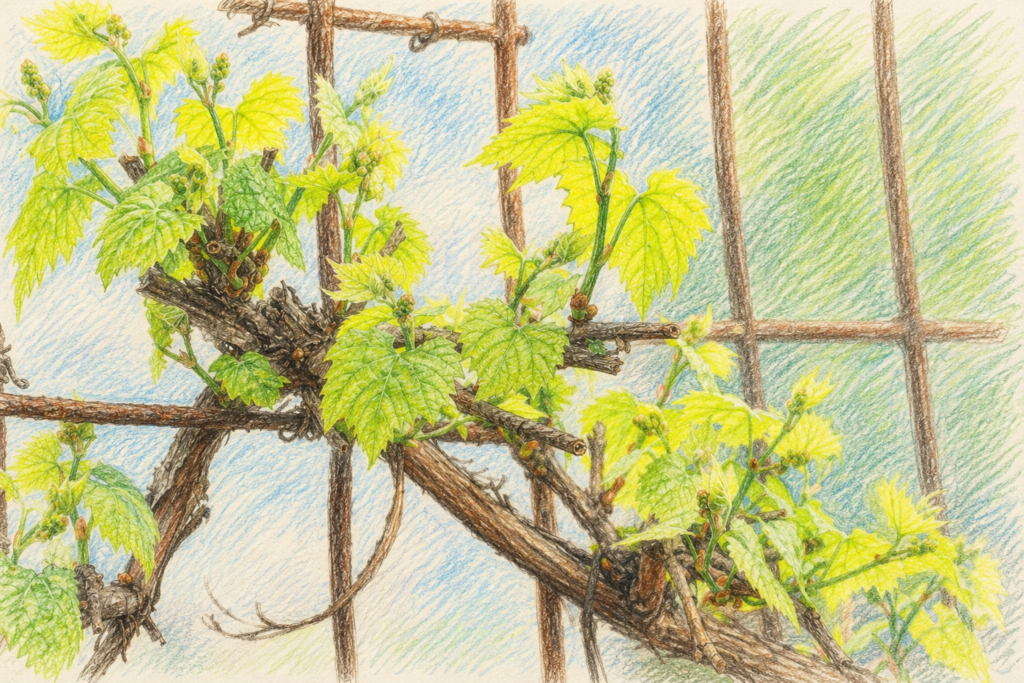
The more we contemplate God’s involvement in all aspects of our lives, the more we are able to grow in humility. We could say that humility is the virtue that enables a person to see things for what they really are. This humility helps us keep the right perspective as we live our vocation. Jesus tells His disciples, “You did not choose me, but I chose you and appointed you that you should go and bear fruit and that your fruit should abide; so that whatever you ask the Father in my name, he may give it to you.” (John 15:16 RSV) The knowledge of the responsibility of each vocation is to know the fruit He is asking you to bear. He also says that in addition to bearing fruit, it must be fruit that endures or abides. For our vocations, this means that when we work at bearing fruit, we do so with the intention that it endure — willing to bear all things to see it through.
Let’s face it, each vocation comes with its share of responsibilities that can be heavy at times, or events that are the least desirable to go through. If we lose the connection to the fact that our vocations come from God, we could begin to view our responsibilities as burdens. Maintaining the perspective that comes from faith in one’s vocation can be the difference between viewing things as a burden or as a sacrifice to be made. John XXIII saw this himself. In that same audience, he prayed that when “the difficulties of life, the hardness of duties, the labors, the misunderstandings, or the crises” disturbed their serenity, “the thought of the glory the Lord prepares in Heaven for his good and faithful servants” would always give them “strength and renewed courage.” In other words, it is our choice how we go through life’s challenges — with serenity and peace, or with anxiety and frustration.
We can feel all those things, many times at once, as we go through life and what comes our way. It is natural to get frustrated or anxious; the warning from John XXIII has more to do with what we do when we feel bogged down with life’s demands. In the end, we have to see that what is demanded of us is love, the greatest commandment, loving God and neighbor. When we stay mindful of our calling to love, the demands of our vocation become sacrificial; when we lose sight of the love required of us, the same demands become burdensome. The difference, then, is how we respond to the demands placed on us. It is being aware of the weight, and deciding to carry it as an act of charity for those it serves — rather than turning inward and resenting the inconvenience.
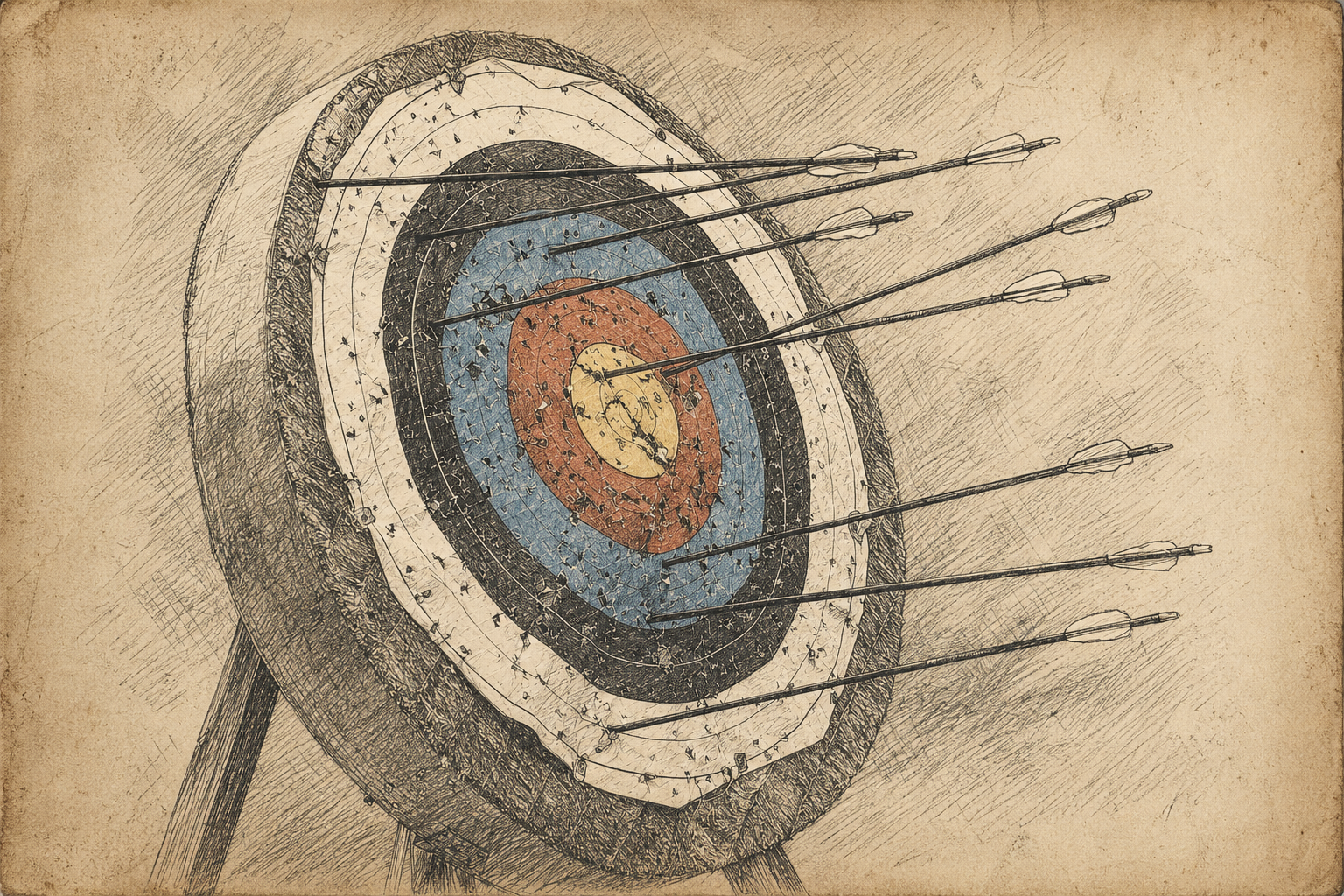
This does not mean that the drain or weight of the sacrifice goes unfelt. I don’t think the difference falls between “feels heavy” and “feels light.” It falls between what the will does with the heaviness. You can feel thoroughly bogged down, and still, by an act of the will, offer what you can in love instead of grumbling. On the hard days, the felt heaviness is not evidence that one has slipped into viewing one’s vocation as simply burdensome. The thing love asks is more precise than that, and more within reach. The question love asks is simpler: is it still being offered? It is when the offering stops, and only the enduring remains, that the act begins to lose that character. And when the weight knocks any of us off course, the way back is a single interior turn: the offering re-aimed, even mid-stride, toward the one it’s for and toward God.
The act of sticking with something, of doing one’s best to carry the weight of one’s responsibilities, despite the negative feelings that sometimes surface, is perseverance. The whole of our vocation is never summed up in one isolated event; it is summed up in all the choices we make and in whether we keep going forward, no matter the cost. That takes perseverance. This is why the tradition ties perseverance so closely to fidelity rather than to feeling. Fidelity is precisely the constancy of orientation of one’s will to keep directing oneself to choose what is right and loving. The faithful person isn’t the one whose love stays warm but the one whose love stays directed to God and others. Perseverance becomes sacrifice’s actual shape over a lifetime.
What John XXIII asked of teachers, he was asking of the whole Church through the Council — and through the Church, of every baptized person. This is where his thought meets Gaudium et Spes on the Church in the modern world, and Lumen Gentium on the universal call to holiness: the responsibility that measures a vocation is not reserved for teachers, or for the hierarchy of the Church, but laid on every Christian according to what has been entrusted to them.
Earlier, we heard the Lord tell His disciples, “You did not choose me, but I chose you and appointed you that you should go and bear fruit and that your fruit should abide.” That is what every vocation finally is: a fruit-bearing entrusted to us by Someone, for someone. Its greatness is measured by what has been placed in our hands; its faithfulness, by whether love keeps its direction through every weather of the soul. The fruit that lasts is love that stays directed.